
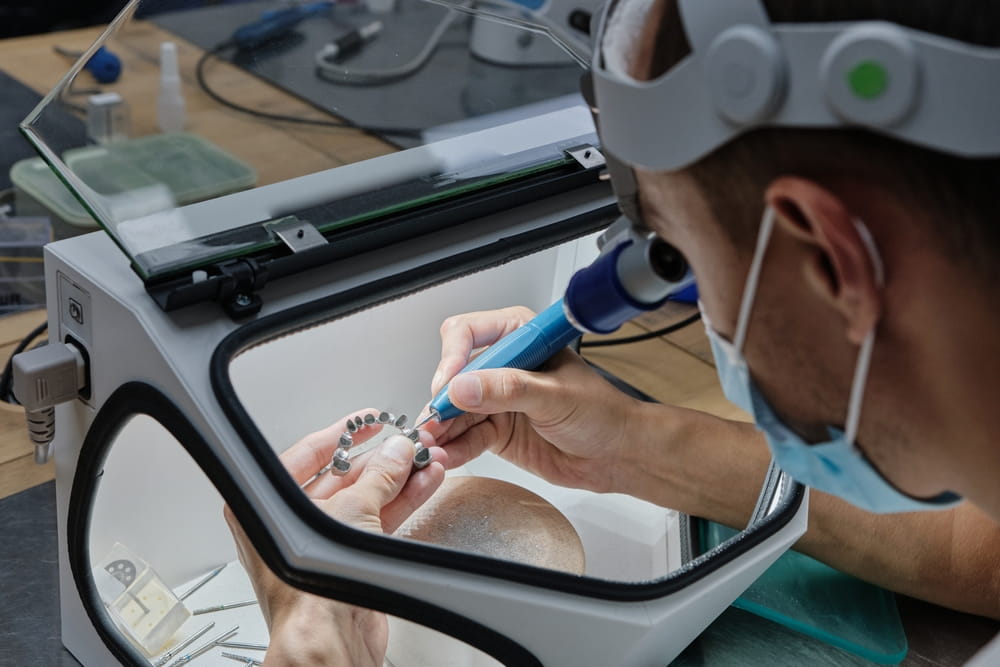
Dental crowns are one of the most reliable ways to restore damaged or weakened teeth. Whether a tooth has been affected by decay, fracture, or wear, a crown can protect it while restoring strength and appearance. At Back Bay Dental in Wolfeboro, NH, Dr. Nicholas Ciancarelli educates patients throughout Carroll County and the greater Lake Winnipesaukee region about how crowns work and what to expect during the process. Understanding each step can help reduce anxiety and provide clarity about how this common restorative treatment supports long-term oral health.
What Is a Dental Crown?
A dental crown is a custom-made cap that fully covers a tooth above the gumline. It restores the tooth’s shape, size, strength, and appearance while protecting it from further damage. Crowns are often recommended when a tooth is too compromised for a simple filling but does not require extraction.
Crowns are commonly included within comprehensive Cosmetic & Restorative Dentistry treatment plans. They can repair cracked teeth, strengthen teeth after root canal treatment, improve severely worn enamel, or enhance cosmetic concerns such as discoloration or misshapen teeth. By encasing the entire visible portion of the tooth, a crown acts as a protective barrier against additional stress.
Step One: Examination and Diagnosis
The first step in the crown process is a thorough evaluation. During this appointment, the tooth is examined for decay, structural damage, and gum health. X-rays or advanced imaging such as 3D CBCT Dental Imaging may be used to assess the tooth’s roots and surrounding bone structure.
This evaluation ensures that the tooth can support a crown and that no underlying infection or fracture extends below the gumline. If additional treatment is necessary before crown placement, it will be addressed to create a stable foundation for the restoration.
Step Two: Preparing the Tooth
Once the tooth is deemed suitable for a crown, it must be prepared. This involves reshaping the outer surface of the tooth to create space for the crown to fit securely. The amount of enamel removed depends on the material selected and the condition of the tooth.
If a significant portion of the tooth is missing due to decay or fracture, a buildup material may be used to restore sufficient structure before crown placement. Local anesthesia is typically administered to ensure comfort during the procedure. Careful preparation ensures that the final crown fits properly and aligns with the surrounding teeth.
Step Three: Impressions or Digital Scans
After preparation, impressions or digital scans are taken to capture the precise shape of the tooth and surrounding bite. Digital technology has streamlined this process, allowing for highly accurate modeling and improved patient comfort.
Modern advancements such as CEREC Crowns demonstrate how computer-aided design and manufacturing can produce custom ceramic restorations with exceptional precision. Digital imaging helps ensure the crown matches the natural contours and shade of adjacent teeth.
Step Four: Temporary Crown Placement
In traditional crown procedures, a temporary crown is placed while the permanent one is fabricated in a dental laboratory. This temporary restoration protects the prepared tooth and maintains function until the final crown is ready.
Temporary crowns are not as strong as permanent ones, so patients are typically advised to avoid sticky or hard foods during this phase. Proper care ensures that the tooth remains protected while awaiting final placement.
Step Five: Final Crown Placement
Once the permanent crown is ready, the temporary restoration is removed, and the fit of the new crown is carefully evaluated. The dentist checks for proper alignment, bite balance, and color matching. Minor adjustments may be made to ensure comfort and function.
When everything fits correctly, the crown is permanently bonded to the tooth using strong dental cement. The result is a durable, natural-looking restoration that blends seamlessly with the surrounding teeth.
Same-Day Crown Options
Advancements in dental technology have made it possible to complete some crown procedures in a single visit. With same-day systems like CEREC Crowns, digital impressions and in-office milling allow for immediate fabrication and placement of the restoration.
This approach eliminates the need for temporary crowns and multiple appointments. Patients benefit from convenience and faster restoration while still achieving high-quality, customized results.
Caring for Your New Crown
After placement, caring for a dental crown is similar to caring for natural teeth. Regular brushing, flossing, and routine dental checkups through General Dentistry help maintain the integrity of the crown and surrounding tissues.
Although crowns are strong, they are not indestructible. Avoiding habits such as chewing ice, biting hard objects, or grinding teeth without protection helps prolong their lifespan. With proper care, many crowns last 10 to 15 years or longer.
When a Crown May Be Part of a Larger Treatment Plan
In some cases, crowns serve as part of broader restorative solutions. For example, crowns are used to complete Implant Restoration procedures when replacing missing teeth. They can also reinforce teeth following certain surgical treatments within Oral Surgery.
By restoring both structure and appearance, crowns play a versatile role in maintaining oral function. They support proper bite alignment, protect vulnerable teeth, and enhance overall smile aesthetics.
Understanding the process of getting a dental crown can ease concerns and highlight the benefits of this common restorative procedure. From initial evaluation to final placement, each step is designed to ensure durability, comfort, and natural appearance. For residents of Wolfeboro, NH, Carroll County, and the greater Lake Winnipesaukee region, Back Bay Dental and Dr. Nicholas Ciancarelli remain committed to providing education and guidance for maintaining strong, healthy smiles.
Resources
American Dental Association. (2022). Crowns: Restoring Teeth. ADA.
Rosenstiel, S. F., Land, M. F., & Fujimoto, J. (2015). Contemporary Fixed Prosthodontics. Elsevier.
Miyazaki, T., et al. (2009). A review of dental CAD/CAM: Current status and future perspectives. Journal of Prosthodontic Research.