
A brighter smile is one of the most popular cosmetic goals among adults today. From weddings and job interviews to everyday confidence, whiter teeth can make a noticeable impact. At Back Bay Dental in Wolfeboro, NH, Dr. Nicholas Ciancarelli helps patients throughout Carroll County and the greater Lake Winnipesaukee region understand their whitening options so they can make informed decisions. While both in-office and at-home whitening methods aim to reduce stains and discoloration, there are important differences in effectiveness, speed, cost, and customization.
Why Teeth Become Discolored
Before comparing whitening options, it helps to understand why teeth stain in the first place. External discoloration often develops from coffee, tea, red wine, tobacco, and richly pigmented foods. These substances attach to enamel and gradually dull the natural brightness of teeth. Aging also contributes to discoloration, as enamel thins over time and reveals the yellowish dentin beneath.
Internal stains may result from certain medications, trauma, or excessive fluoride exposure during childhood. The type and depth of staining influence how well teeth respond to whitening treatments. An evaluation within General Dentistry can help determine whether whitening is appropriate and whether any underlying oral health issues should be addressed first.
What Is In-Office Teeth Whitening?
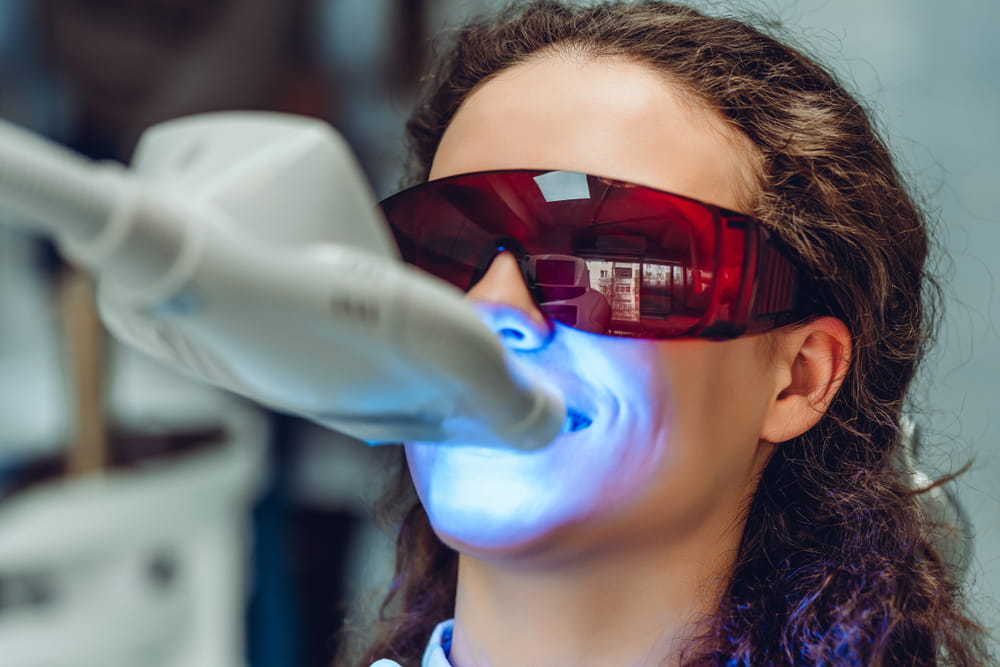
In-office teeth whitening is performed in a dental setting using professional-strength bleaching agents. The procedure typically involves protecting the gums, applying a concentrated whitening gel to the teeth, and allowing it to activate for a specified period. Some systems may use light or laser technology to enhance results.
Because professional whitening products contain higher concentrations of active ingredients, they can produce noticeable results in a single visit. In-office treatment is often incorporated into broader Cosmetic & Restorative Dentistry plans for patients seeking a more comprehensive smile enhancement. The controlled environment allows for careful monitoring, reducing the risk of uneven whitening or gum irritation.
What Is At-Home Teeth Whitening?
At-home whitening can take several forms, including over-the-counter strips, trays, gels, or whitening toothpaste. These products use lower concentrations of bleaching agents and are applied daily over a period of days or weeks. Some at-home options may involve custom trays designed to fit your teeth more precisely.
While at-home treatments can be convenient and more affordable initially, results are typically more gradual. Because the bleaching agents are less concentrated, they may not effectively address deeper or more stubborn stains. Additionally, improper application can lead to uneven whitening or gum sensitivity.
Comparing Effectiveness and Speed
One of the primary differences between in-office and at-home whitening is the speed of results. Professional in-office whitening often delivers visible improvement in a single appointment, making it appealing for individuals preparing for an upcoming event.
At-home whitening, by contrast, requires consistency and patience. Results may take several weeks to become noticeable. While some individuals achieve satisfactory outcomes with at-home systems, others may find the gradual progress less dramatic. The depth of staining plays a significant role in determining which method will be more effective.
Safety and Sensitivity Considerations
Tooth sensitivity is a common concern during whitening. In-office treatments are carefully supervised, and protective barriers are used to shield the gums. Adjustments can be made immediately if sensitivity occurs. Professional evaluation ensures that enamel health and gum condition are appropriate for whitening.
If a patient has gum recession or inflammation, evaluation through services like Periodontal Medicine may be recommended before whitening. At-home products lack professional supervision, which can increase the risk of overuse or irritation if directions are not followed carefully.
Customization and Precision
In-office whitening offers a higher level of customization. Shade selection, application time, and concentration are tailored to each patient’s needs. Existing dental restorations are evaluated to ensure balanced results, as whitening agents do not change the color of crowns or fillings.
Advanced tools such as 3D CBCT Dental Imaging may be used in broader treatment planning to evaluate tooth structure before cosmetic procedures. While imaging is not always necessary solely for whitening, comprehensive evaluation ensures the safest and most predictable outcome.
At-home kits, particularly over-the-counter products, are less personalized. Ill-fitting trays or inconsistent application can result in uneven color changes.
Cost Differences
Cost is often a deciding factor. At-home whitening products are generally less expensive upfront. However, repeated purchases over time may add up, especially if desired results are not achieved.
In-office whitening represents a higher initial investment but often delivers faster, more dramatic results. Patients who value efficiency and professional oversight may find the cost worthwhile. Ultimately, the best option depends on personal goals, budget, and the degree of discoloration.
Maintaining Whitening Results
Regardless of the method chosen, maintaining results requires consistent oral hygiene and mindful lifestyle habits. Limiting staining beverages, avoiding tobacco, and scheduling regular cleanings help preserve brightness.
Routine visits through General Dentistry support long-term results by removing surface stains and monitoring enamel health. Touch-up treatments, whether in-office or at home, may be recommended periodically to maintain the desired shade.
Which Option Is Right for You?
Choosing between in-office and at-home whitening depends on your timeline, budget, sensitivity level, and cosmetic goals. Individuals seeking immediate, dramatic improvement may prefer professional treatment. Those comfortable with gradual change and consistent application may find at-home systems sufficient.
An informed decision begins with understanding your oral health and the type of staining present. Both approaches can enhance your smile when used appropriately and safely.
A brighter smile can boost confidence and refresh your overall appearance. By understanding the differences between in-office and at-home whitening, you can select the approach that aligns best with your needs. For residents of Wolfeboro, NH, Carroll County, and the greater Lake Winnipesaukee region, Back Bay Dental and Dr. Nicholas Ciancarelli remain committed to providing education and guidance for achieving healthy, radiant smiles.
Resources
American Dental Association. (2023). Tooth Whitening/Bleaching: Treatment Considerations. ADA.
Joiner, A. (2006). The bleaching of teeth: A review of the literature. Journal of Dentistry.
Carey, C. M. (2014). Tooth whitening: What we now know. Journal of Evidence-Based Dental Practice.