
Dental crowns have long been used to restore damaged, weakened, or heavily filled teeth. Traditionally, the process often required multiple appointments, temporary crowns, and weeks of waiting for a dental laboratory to fabricate the final restoration. Today, advancements in digital dentistry have changed that experience significantly through the use of CEREC crown technology.
Patients throughout Wolfeboro, NH, Carroll County, and the greater Lake Winnipesaukee region are increasingly interested in dental solutions that combine efficiency, comfort, and precision. Back Bay Dental and Dr. Nicholas Ciancarelli are part of a growing shift toward modern restorative technologies that streamline treatment while maintaining natural-looking results. Understanding what happens during a CEREC crown appointment may help patients feel more comfortable and informed before treatment begins.
Why a Dental Crown May Be Recommended
A dental crown is designed to cover and protect a tooth that has become weakened or damaged. Crowns may help restore shape, function, and strength while supporting the long-term stability of the tooth. Dentists commonly recommend crowns when a tooth has extensive decay, fractures, worn enamel, or a large filling that no longer provides enough support.
Crowns may also be used after root canal treatment or as part of larger restorative plans involving Implant Restoration and Cosmetic & Restorative Dentistry. In many cases, the goal is to preserve the natural tooth structure while helping patients maintain comfortable chewing and speaking function.
CEREC technology allows certain crowns to be designed, fabricated, and placed within a single visit. This approach has become especially appealing for patients who want to avoid multiple appointments or temporary restorations.
The Initial Examination and Digital Evaluation
A CEREC crown appointment typically begins with a detailed examination of the affected tooth. The dentist evaluates the tooth’s condition, surrounding gums, and bite alignment to determine whether a same-day crown is appropriate. Advanced imaging technology may also be used to gather highly detailed diagnostic information.
Digital tools such as 3D CBCT Dental Imaging help dentists evaluate the tooth and surrounding structures with precision. This technology may assist in identifying fractures, decay, or other concerns that are not always visible during a standard visual examination alone.
Once the tooth is evaluated, the dentist prepares the area for restoration. Any damaged or decayed portions of the tooth are carefully removed while preserving as much healthy tooth structure as possible. Local anesthetic may be used to keep the patient comfortable throughout the procedure.
Replacing Traditional Impressions With Digital Scanning
One of the most noticeable differences during a CEREC crown appointment is the use of digital scanning instead of traditional dental impressions. Rather than biting into trays filled with impression material, patients typically undergo a quick digital scan of the teeth using a handheld intraoral scanner.
The scanner captures highly detailed three-dimensional images of the tooth and surrounding bite alignment. Many patients appreciate this process because it often feels cleaner, faster, and more comfortable than traditional impressions. Individuals with strong gag reflexes frequently prefer digital scanning for this reason.
The digital model is then transferred to specialized software where the crown is designed. Dentists can customize the shape, contour, and fit of the restoration while carefully considering how the crown will function within the patient’s natural bite.
Designing and Milling the Crown In-Office
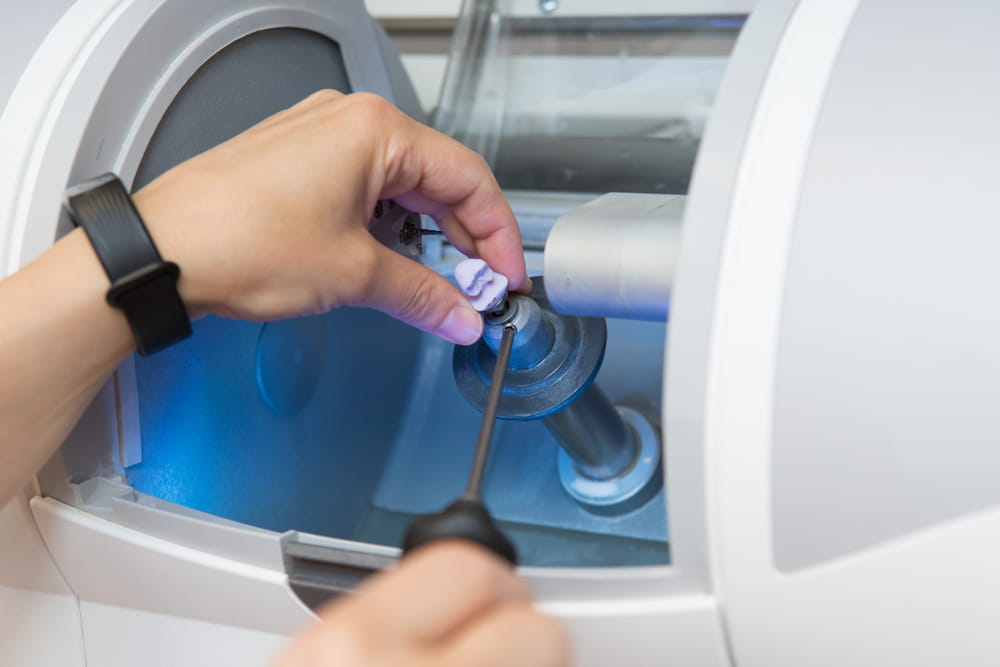
After the digital design is finalized, the information is sent to an in-office milling machine that fabricates the crown from a solid ceramic block. This process is one of the defining features of CEREC Crowns.
During milling, the machine carefully carves the restoration to match the digital design specifications. The ceramic material is selected for both strength and aesthetics, allowing the final crown to resemble natural tooth enamel in appearance.
Some patients are surprised by how quickly this process occurs. While the crown is being fabricated, patients may relax in the office while the dental team prepares for placement. In many cases, the entire restoration process can be completed within a single appointment lasting just a few hours.
Modern technologies such as 3D Printing and advanced digital systems continue improving efficiency and precision in restorative dentistry, contributing to the growing popularity of same-day dental solutions.
Fitting and Securing the Final Restoration
Once the crown has been milled, the dentist carefully checks the fit, color match, and bite alignment. Minor adjustments may be made to ensure the crown feels natural and functions comfortably during chewing and speaking.
After confirming proper fit, the crown is bonded securely to the prepared tooth using dental cement or adhesive materials. The dentist then polishes the restoration to create a smooth and natural appearance.
Patients often appreciate leaving the appointment with a completed restoration rather than wearing a temporary crown for several weeks. This may reduce the inconvenience associated with temporary restorations becoming loose, uncomfortable, or damaged between visits.
Benefits Patients Often Associate With CEREC Technology
Many individuals throughout the Lake Winnipesaukee region are drawn to same-day crown technology because of its convenience and efficiency. Commonly discussed benefits include:
- Completion of treatment in a single visit
- No temporary crown required
- Digital impressions instead of traditional molds
- Natural-looking ceramic materials
- Faster restoration of chewing function
- Reduced need for multiple injections or appointments
- Precise digital customization
- Improved convenience for busy schedules
While every patient’s treatment needs are unique, these features have contributed to the increasing popularity of same-day restorations in modern dentistry.
A More Efficient Approach to Restorative Dentistry
Dental technology continues evolving in ways that improve efficiency, comfort, and precision for patients. CEREC crowns represent one example of how digital dentistry has transformed restorative treatment by simplifying procedures that once required weeks to complete.
For many residents of Wolfeboro and the greater Lake Winnipesaukee area, same-day dental solutions fit well within active and busy lifestyles. Back Bay Dental continues participating in the broader movement toward advanced dental technologies that support modern patient expectations while emphasizing long-term oral health and restoration.
Resources
Fasbinder, D. J. (2010). Digital Dentistry: Innovation for Restorative Treatment. Compendium of Continuing Education in Dentistry.
Miyazaki, T., Hotta, Y., Kunii, J., Kuriyama, S., & Tamaki, Y. (2009). A Review of Dental CAD/CAM: Current Status and Future Perspectives. Journal of Prosthodontic Research.
Ritter, A. V. (2017). Chairside CAD/CAM Dentistry: Current State of the Art. Dental Clinics of North America.