
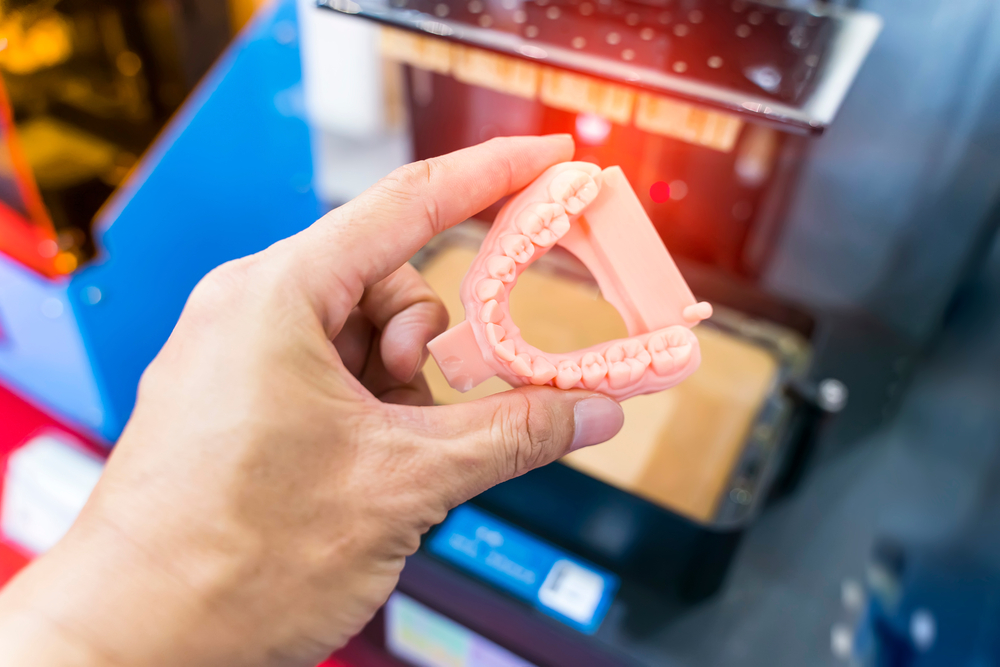
Welcome to this exploration of the incredible shift happening in modern restorative and corrective oral health: the integration of 3D printing, also known as additive manufacturing. At Back Bay Dental, serving the greater Great Lakes and Lake Winnipesaukee region in Wolfeboro, NH, we’re keenly interested in educating our community about the technologies that are driving superior accuracy and efficiency in care. Historically, creating dental models, prosthetics, and appliances relied on a lengthy, multi-step process involving physical impressions, plaster casts, and traditional lab work. This conventional workflow was prone to human error, material distortions, and significant delays, often requiring patients to wait weeks for a final product. The introduction of 3D printing has completely upended this paradigm, moving the process from the imprecise analog world to a highly controlled digital environment.
The foundational concept of 3D printing in dentistry is its ability to build complex, custom objects layer by layer from a digital file. This digital blueprint is typically generated from a three-dimensional intraoral scan of the patient’s mouth, eliminating the need for uncomfortable, messy physical molds. The digital file is then processed by specialized software and sent directly to an in-office or laboratory 3D printer. This seamless digital workflow ensures that the final printed appliance, guide, or model is an exact, highly precise replica of the patient’s unique oral anatomy. The technology’s speed, precision, and ability to use various biocompatible materials are what make it a revolutionary force, significantly enhancing the quality of outcomes and the overall patient experience compared to previous manufacturing methods.
Precision and Customization for Superior Fit
One of the most significant advantages of employing 3D printing technology in dentistry is the unparalleled precision and customization it enables for patient-specific devices. Traditional fabrication methods, which rely on casting and manual carving, inherently carry a risk of slight inaccuracies that can compromise the fit and function of a restoration. Even minor discrepancies can lead to discomfort, the need for time-consuming adjustments, or a repair that is more susceptible to failure over the long term.
In contrast, 3D printing translates a high-resolution digital file, captured with micron-level accuracy, directly into a physical object. This digital design ensures that the final product—whether it’s an orthodontic aligner, a crown model, or a surgical guide—seats perfectly and comfortably against the surrounding teeth and gums. The level of customization extends to the ability to design complex geometries that are difficult or impossible to create with traditional milling or casting. This precision is especially crucial in procedures like dental implant surgery, where a guide must precisely dictate the implant’s depth, angle, and position for long-term success. By minimizing the chances of an imperfect fit, 3D printing reduces chair time, decreases the need for costly remakes, and ultimately provides a better, more predictable clinical outcome for the patient.
Streamlined Workflows and Dramatic Time Savings
The integration of 3D printing into dental workflows has created a streamlined digital workflow that results in significant time savings for both dental professionals and patients. In a traditional setting, a dental laboratory would receive a physical impression, pour a plaster model, and then begin the multi-step fabrication process, which could take days or even weeks. This waiting period often necessitates the use of temporary restorations, which add another layer of complexity and potential discomfort to the treatment plan.
With 3D printing, the time from digital impression to final product is drastically reduced. Once the digital design is finalized on the computer, the object can be printed in a matter of hours, rather than days. This efficiency enables faster turnaround times for a variety of appliances, including temporary crowns, night guards, and custom surgical guides. For many applications, this speed can translate into a single-visit procedure, eliminating the logistical burden of multiple appointments and the patient’s extended wait times. By keeping the manufacturing process in-house or partnering with a digitally integrated lab, the dental practice gains greater control over quality, reduces shipping costs and delays, and can deliver a superior product in a fraction of the time, making the entire treatment process far more efficient and patient-friendly.
Diverse and Expanding Clinical Applications
The versatility of 3D printing has enabled it to revolutionize numerous areas of dentistry, going far beyond models and basic appliances. The technology is constantly expanding its reach as new, biocompatible printing resins and materials are developed to meet clinical demands for durability and aesthetics. This has created a vast array of specialized applications that were previously impractical or less accurate using older methods.
- Surgical Guides: Customized guides for dental implant placement ensure maximum precision, translating the surgical plan directly from the CT scan to the patient’s mouth.
- Orthodontics: 3D printing is the backbone of clear aligner therapy, where a sequence of precise models is printed to create the series of aligners that gradually move the teeth. It is also used to print custom brackets and retainers.
- Prosthodontics: The technology can fabricate highly accurate models for crafting traditional crowns, bridges, and partial denture frameworks, and is increasingly used to directly print definitive restorations, temporary crowns, and complete dentures with excellent fit and aesthetics.
- Diagnostic Models: Accurate printed models enable precise treatment planning, case presentation, and diagnostic wax-ups, enhancing communication among the professional, the lab, and the patient.
This breadth of application illustrates how 3D printing supports a comprehensive digital workflow across multiple dental specialties, ensuring that everything from the simplest night guard to the most complex implant surgery is executed with the highest degree of accuracy and customization. The ability to prototype and produce a diverse range of devices quickly and accurately positions 3D printing as an indispensable tool in the modern oral healthcare setting.
Innovation in Materials and Future Regenerative Potential
The future trajectory of 3D printing in dentistry is closely tied to advancements in material science, which continues to push the boundaries of what can be printed. Early applications were limited to basic resins suitable only for models and temporary devices. Today, dental-specific resins have evolved to include materials that are highly durable, aesthetically pleasing, and certified for long-term intraoral use, meeting rigorous standards for strength, wear resistance, and biocompatibility. Researchers are continually developing stronger ceramic-infused polymers and exploring techniques to 3D print metal frameworks for restorations such as partial dentures, using advanced methods like Selective Laser Melting (SLM).
Perhaps the most exciting and forward-looking area of innovation is bioprinting, which involves using specialized bio-inks containing living cells and biological materials. While still primarily a research endeavor, the ultimate potential of bioprinting in dentistry is profound. It could lead to the ability to print patient-specific bone grafts for regenerative procedures, or even the eventual goal of bioprinting entire, fully functional teeth for transplantation. This regenerative capability represents a potential paradigm shift, moving the focus of dentistry from restoration and replacement to biological regeneration, offering hope for truly revolutionary patient outcomes in the years to come.
Conclusion
Advancements in 3D printing represent a true technological revolution in dentistry, transforming the field from analog methods to a highly efficient, customized digital environment. From the production of precision surgical guides to the rapid fabrication of temporary and permanent restorations, this additive manufacturing approach is enhancing the quality of care, reducing treatment times, and vastly improving the overall patient experience. By embracing such powerful technology, the quality of care is elevated, ensuring greater comfort and more predictable outcomes for individuals across the greater Great Lakes and Lake Winnipesaukee region. Thank you for taking the time to learn about this critical digital advancement with Back Bay Dental.
Resources
Alhmidi, A., Azhari, M., Hajeer, M. Y., & Al-Mashhadani, F. H. (2023). Applications of Three-Dimensional Printing in Orthodontics: A Comprehensive Review. Journal of Orthodontic Science.
Kim, H. J., & Jo, W. S. (2023). Advances in 3D printing materials for dental applications: A narrative review. Clinical and Experimental Dental Research.
Stansbury, J. W., & Idacavage, M. J. (2016). 3D Printing with Polymers: Challenges and Opportunities. Dental Materials.