
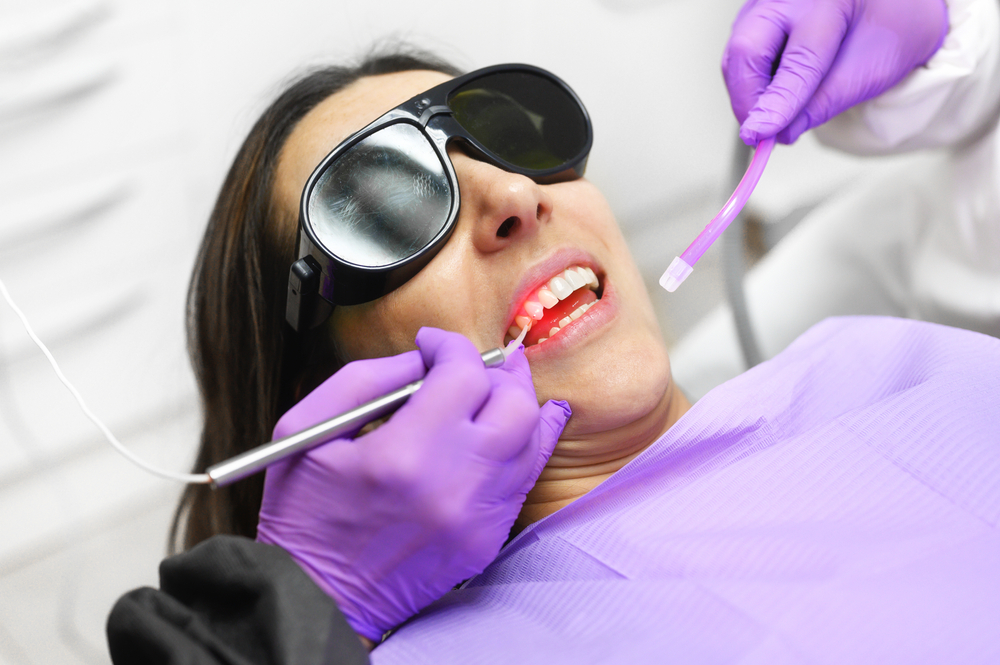
The use of lasers in dentistry has revolutionized how many procedures are performed, offering a more comfortable, precise, and minimally invasive experience for patients. Though laser technology was first introduced into dental care several decades ago, recent advancements have significantly expanded its applications in both restorative and cosmetic treatments. At Back Bay Dental in Wolfeboro, NH, serving Carroll County and the Lake Winnipesaukee region, patient education is a top priority—and understanding the role lasers play in modern dentistry is a key part of that. This blog explores how dental lasers work, what conditions they treat, and how they’re changing the dental experience.
Understanding Dental Lasers: A High-Tech Tool
A laser, in basic terms, is a device that emits a highly concentrated beam of light. In dentistry, lasers can be finely tuned to target either soft or hard tissue, depending on the specific procedure being performed. The light energy is absorbed differently depending on the tissue, which makes lasers highly effective at cutting, vaporizing, or reshaping oral structures without damaging surrounding areas. This precision is one of the biggest advantages of laser dentistry compared to traditional tools like drills or scalpels.
Dental lasers fall into two main categories: soft tissue lasers and hard tissue lasers. Soft tissue lasers are typically used for procedures involving the gums, cheeks, tongue, or other oral mucosa. Hard tissue lasers are designed for work on enamel and dentin, such as removing tooth decay or preparing a tooth for a filling. Because lasers can be calibrated for specific procedures and tissue types, they offer an advanced level of control that helps minimize trauma and discomfort during treatment.
Minimally Invasive Treatment with Less Discomfort
One of the most appreciated benefits of dental lasers is their ability to reduce or even eliminate the need for anesthesia in certain procedures. Because the laser seals nerve endings and blood vessels as it works, patients often report experiencing significantly less pain and bleeding during and after treatment. This is particularly appealing to individuals with dental anxiety or those who are sensitive to traditional dental tools.
Lasers also eliminate the mechanical vibration and noise commonly associated with dental drills, which can be unsettling for some patients. This silent and smooth method of treatment enhances the overall comfort of the dental visit. Additionally, because lasers reduce the need for incisions and sutures, patients generally experience quicker healing times and lower risk of infection. This makes laser-assisted procedures an excellent option for those looking for less invasive approaches to oral care.
Common Applications of Dental Lasers
Dental lasers are versatile tools that can be used in a wide variety of procedures. Their effectiveness and precision have expanded their use across general dentistry, periodontics, endodontics, and cosmetic treatments. Some common applications of lasers in dental care include:
- Treating gum disease by removing infected tissue and bacteria from periodontal pockets
- Reshaping the gumline in cases of gummy smiles or uneven gums
- Performing frenectomies to address tongue-tie or lip-tie in children and adults
- Removing benign oral lesions or growths with minimal bleeding
- Assisting in root canal therapy by sterilizing infected tissue
- Whitening teeth through laser-activated bleaching agents
- Detecting and removing early-stage cavities in a less invasive way
Each of these procedures benefits from the laser’s ability to minimize tissue damage and enhance healing. As technology continues to evolve, the list of procedures where lasers can be effectively used continues to grow.
Enhanced Precision in Periodontal and Surgical Care
In periodontics, lasers are especially valuable for managing gum disease. Traditional methods of gum surgery often involve cutting and suturing, which can lead to discomfort, swelling, and longer recovery periods. Laser-assisted periodontal therapy allows dentists to target diseased tissue and bacteria more accurately without affecting healthy gum tissue. The result is a more conservative and patient-friendly treatment experience.
Similarly, for minor oral surgeries—such as removing small growths or biopsying tissue—lasers provide a sterile, precise alternative to conventional surgical instruments. The laser simultaneously cuts and cauterizes, reducing bleeding and promoting quicker healing. This dual-action makes it an ideal tool in procedures that require both accuracy and patient comfort. For people who may have been avoiding treatment due to fear of surgery, laser options offer a more approachable solution.
Cosmetic Dentistry and Lasers: Aesthetic Benefits
Cosmetic dentistry has also benefited greatly from laser technology. Gingival contouring, for instance, can be performed with a laser to create a more symmetrical and aesthetically pleasing gumline. This is often done in conjunction with veneers or crowns to enhance the overall appearance of the smile. Because laser contouring is minimally invasive, patients experience less discomfort and quicker results than with traditional methods.
Laser teeth whitening is another cosmetic application. In this procedure, a whitening agent is applied to the teeth and activated by a laser to accelerate the bleaching process. This allows for more dramatic results in a shorter time frame. The precise energy of the laser ensures the whitening effect is focused and controlled, reducing sensitivity that can occur with over-the-counter treatments. These applications illustrate how lasers not only improve the function of dental treatments but also contribute to achieving desired aesthetic outcomes.
A Glimpse Into the Future of Dental Technology
As dental lasers become more widely adopted, researchers and manufacturers continue to refine their capabilities. Emerging developments include even more precise wavelength control, improved handheld devices, and integration with other imaging and diagnostic technologies. In the future, laser-guided treatments may become standard practice in areas where precision and comfort are essential.
While not all procedures can be performed with lasers, the number of suitable applications continues to increase. With growing demand for minimally invasive and patient-friendly treatments, laser dentistry is poised to become an even more central part of comprehensive oral care. At Back Bay Dental in Wolfeboro, NH, serving patients throughout Carroll County and the Lake Winnipesaukee region, we are committed to sharing the latest knowledge about innovations that help people feel more informed and confident in their oral health journey.
Resources
Convissar, R. A. (2009). Principles and Practice of Laser Dentistry. Mosby Elsevier.
Sulewski, J. G. (2000). Historical Survey of Laser Dentistry. Dental Clinics of North America.
Coluzzi, D. J. (2010). Fundamentals of Dental Lasers: Science and Instruments. Dental Clinics of North America.